24 - The Difference Between Learning a Skill and Mastering One
There is a moment after completing a beauty course where you realise something important.
You know what to do.
But you don't necessarily feel like you know what you're doing yet.
You've learned the steps. You understand the theory. You've watched the demonstrations, practised the technique and completed your assessment.
Then a real person sits in front of you — and suddenly everything feels different.
That's because learning a skill and mastering one are two very different things.
And there's absolutely nothing wrong with being at the beginning.
Learning Gives You the Foundation
Every professional has to start somewhere.
Training gives you the foundations you need to begin: theory, hygiene, contraindications, product knowledge, technique, positioning, safety and the correct sequence of a treatment.
It gives you a structure to follow.
But a qualification isn't supposed to represent the end of your learning.
It's permission to begin practising what you've been taught.
There is a big difference between understanding something in theory and being able to perform it confidently on different people, repeatedly and consistently.
That part takes time.
You Can Learn the Steps Surprisingly Quickly
Beauty treatments often look simple when they're broken down.
A brow treatment has a sequence.
A facial has a sequence.
A manicure has a sequence.
You can write those steps down, memorise them and follow them.
But knowing the sequence isn't the same as understanding the treatment.
Take brows.
You can learn how to map a brow and understand where different points should sit. Then five clients walk through the door with five completely different faces, growth patterns, densities and levels of symmetry.
Suddenly, simply following a diagram isn't enough.
You have to look.
The same happens with nails.
You can learn how to hold an e-file and which drill bit to use. But controlling your pressure, angle and speed — while understanding the nail you're working on — develops through practice.
And skincare is no different.
You can memorise facial massage movements, but eventually you begin understanding rhythm, pressure, flow and client comfort.
The movements become less mechanical.
That's where technique starts becoming skill.
Repetition Changes Everything
Your first model shouldn't feel the same as your fiftieth.
With repetition, you start noticing things you simply couldn't notice at the beginning.
Your hands become steadier.
Your movements become more deliberate.
You stop concentrating so heavily on remembering what comes next.
You become quicker — not because you're rushing, but because you're no longer second-guessing every movement.
And you begin recognising patterns.
An experienced beauty professional can often look at something and notice details that a beginner hasn't learned to see yet.
That doesn't necessarily mean they were taught something completely different.
Often, they've simply seen it hundreds of times.
Experience trains the eye as much as it trains the hands.
Every Client Teaches You Something Different
One of the biggest limitations of learning any beauty treatment is that no training model can represent every client you'll ever work with.
People are different.
Different skin.
Different nail plates.
Different brow growth.
Different facial structures.
Different sensitivities.
Different expectations.
Even two people requesting exactly the same treatment may require you to approach it slightly differently.
This is why experience becomes such an important part of professional development.
The more people you work with, the larger your mental library becomes.
You start recognising what you've seen before.
You begin adapting.
And perhaps most importantly, you start recognising when something isn't appropriate.
Learning Teaches You How. Mastery Teaches You When and Why.
This is where I think the biggest difference lies.
At the beginning, you're often focused on:
How do I do this?
Eventually, the questions change.
Why am I doing this?
Does this client actually need it?
Should I change my approach?
When should I stop?
What happens if I do more?
Is there a better option?
That shift is incredibly important in beauty.
Knowing how to remove cuticle is one thing.
Knowing when you've removed enough is another.
Knowing how to shape a brow is one thing.
Understanding when the client's natural growth should override your mapping is another.
Knowing how to exfoliate the skin is one thing.
Recognising when someone's skin doesn't need further exfoliation is another.
Technique tells you what you can do.
Experience helps you decide what you should do.
Mistakes Will Be Part of It
Nobody particularly enjoys talking about mistakes in beauty.
We like showing the finished result.
The perfect photograph.
The clean cuticle.
The symmetrical brows.
The glowing skin.
We rarely show the awkward period that came before it.
But becoming good at something usually involves producing work you later realise could have been better.
Perhaps your application took far too long.
Your brow shape wasn't quite as clean as you'd like.
Your massage movements felt slightly awkward.
Your filing could have been more precise.
You struggled with your positioning.
You hesitated.
These moments aren't evidence that you chose the wrong career.
They're information.
You review what happened, understand why and try again.
Of course, there is an important distinction between learning from imperfect technique and ignoring professional safety. Hygiene, contraindications and safe working practices aren't areas where we simply experiment until we get them right.
But within safe practice, correction is part of development.
Sometimes being told why something isn't working is far more valuable than simply being shown the correct result.
Eventually, You Stop Following the Steps
This is one of the most interesting things about becoming experienced in a treatment.
At the beginning, everything can feel very structured.
Step one.
Step two.
Step three.
What's next?
Where does this go?
Which product comes after this one?
With enough repetition, those foundations become almost automatic.
And that frees up your attention.
Instead of concentrating entirely on remembering the treatment, you can concentrate on the person receiving it.
You notice whether they're comfortable.
You notice the condition of their skin.
You can have a conversation without completely losing your place.
You can adapt your positioning.
You can anticipate what you'll need next.
The treatment begins to flow.
That confidence is difficult to teach from a page.
It has to develop.
Speed Isn't Always a Sign of Skill
This is particularly important in today's beauty industry.
We see incredibly fast treatments online.
Twenty-minute appointments.
Perfect transformations condensed into 30-second videos.
Speed can absolutely develop with experience.
But being fast doesn't automatically mean being good.
And being slower while you're learning doesn't automatically mean you're bad.
When you're building a new skill, accuracy and understanding should come before speed.
Your timing will improve naturally as unnecessary movements disappear and your confidence increases.
Trying to force speed too early can encourage shortcuts and poor habits that become much harder to correct later.
Learn to do it properly.
Then learn to do it efficiently.
Watching Someone and Being Watched Are Very Different
Online education has changed beauty training enormously.
And that's a good thing.
We can learn theory, anatomy, product knowledge, hygiene principles and techniques from almost anywhere.
We can replay demonstrations.
Pause.
Rewatch.
Make notes.
Go back to something months later.
But practical education offers something different.
Someone is watching you.
They can see how you're holding the tool.
Where you're placing your hands.
Your posture.
Your pressure.
Your angle.
Where you're hesitating.
Where you're rushing.
Sometimes the difference between struggling with a technique and suddenly understanding it can be one small correction.
Move your hand here.
Change your angle.
Use less pressure.
Sit differently.
Slow down.
Try again.
That's difficult to replicate when nobody can see what you're doing.
Why I've Chosen to Teach 1:1
After years of working within beauty, I've become increasingly interested in how people actually learn practical skills.
Not just how much information I can give someone.
One-to-one training gives me the opportunity to actually watch.
If we're working on brows, I can look at your positioning, tension, shaping and how you're reading the client's natural features.
With skincare, I can watch your pressure, movements, flow, product application and how confidently you're working with the skin in front of you.
With nails, I can see your filing angles, product control, hand positioning and the little habits that can make a huge difference to the finished result.
Most importantly, I can correct something while you're actually doing it.
Not after.
Not from a photograph.
In that moment.
That is what I want my 1:1 training at Crystal Crescent to provide.
Individual attention.
Practical correction.
Questions without the pressure of a room full of students.
And enough space to actually understand the technique you're learning.
But You Won't Leave a Master
And I think this is important to say.
You shouldn't expect to.
No responsible trainer can hand you years of experience in a day.
A course can give you education, technique, professional guidance and a strong foundation.
Then you have to use it.
Practise on models.
Take photographs.
Look closely at your work.
Ask yourself what you would change next time.
Keep learning.
Work on different people.
Become comfortable with the uncomfortable stage where everything isn't perfect yet.
That's where confidence actually comes from.
Not from being told you're brilliant immediately.
From seeing yourself improve.
Mastery Doesn't Really Have a Finish Line
I've worked in beauty for years, and I still learn.
Products change.
Techniques develop.
Equipment improves.
Trends disappear and return.
Research changes our understanding.
And sometimes another professional simply shows you a different way of doing something you've performed for years.
Being experienced doesn't mean deciding you have nothing left to learn.
If anything, experience usually makes you realise how much there still is to know.
That's part of what keeps beauty interesting.
Learn It. Practise It. Understand It.
If you're at the beginning of your beauty career, don't put unnecessary pressure on yourself to immediately work like somebody who has been doing it for ten years.
Learn properly.
Build strong foundations.
Ask questions.
Practise.
Let someone correct you.
Make safe mistakes.
Look at your work critically without destroying your confidence.
And keep going.
Because completing a course is an achievement.
But it isn't the finish line.
It's the point where you finally have the knowledge to start building something with your own hands.
Learning teaches you how.
Experience teaches you why.
And mastery comes from continuing long after someone has handed you the certificate.
READY TO START LEARNING?
The Crystal Crescent Complete Beginner Facial Course is now available.
Designed for beginners entering professional skincare, the course combines online theory with 1:1 practical training at Crystal Crescent in Bradford, giving you the foundation to understand the treatment before developing your technique through hands-on practice.
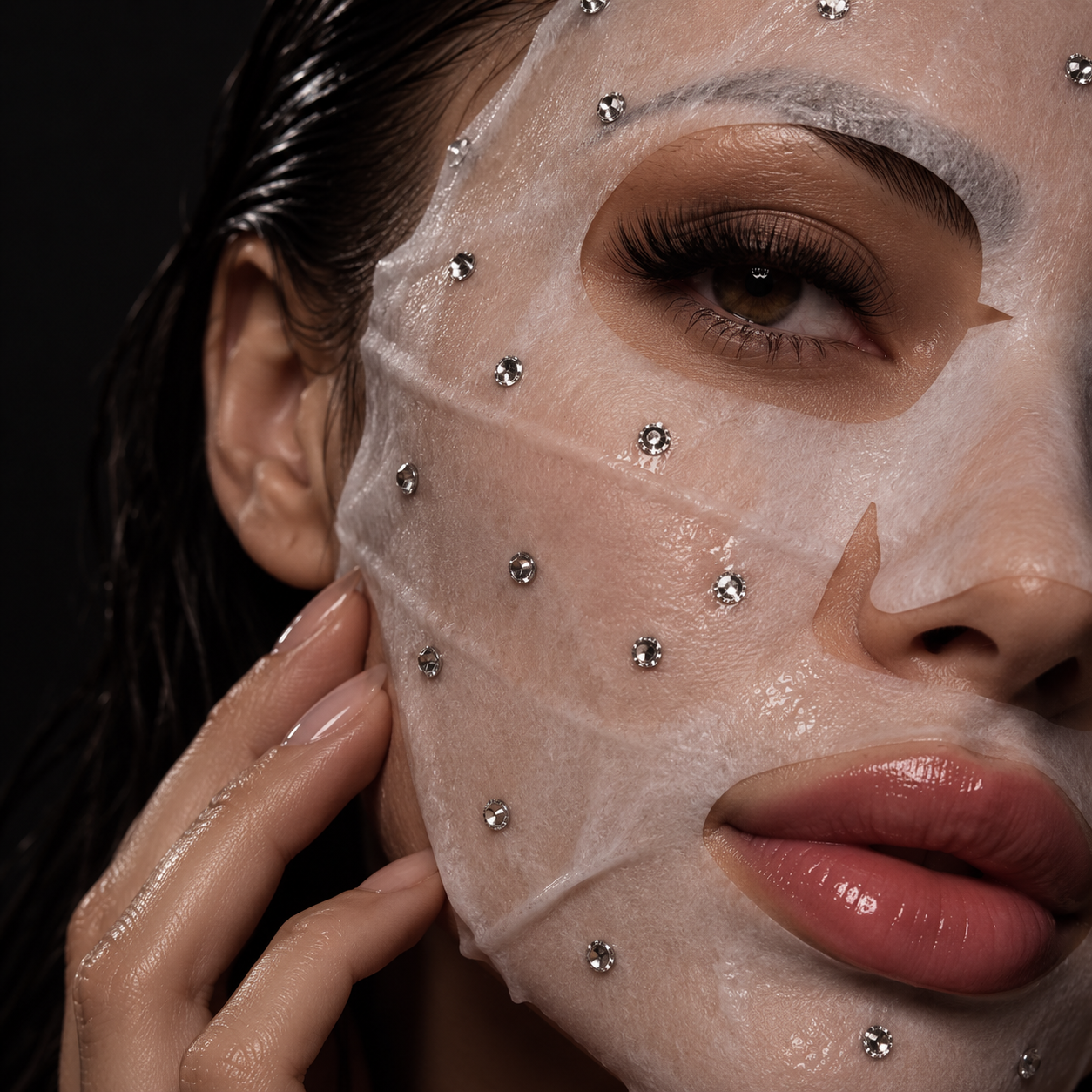
Begin your journey into professional skincare with online theory and a full day of private 1-to-1 training. Learn to analyse skin, select suitable products and perform a complete facial, with personalised guidance throughout your practical day. Designed for beginners and accredited by ABT.