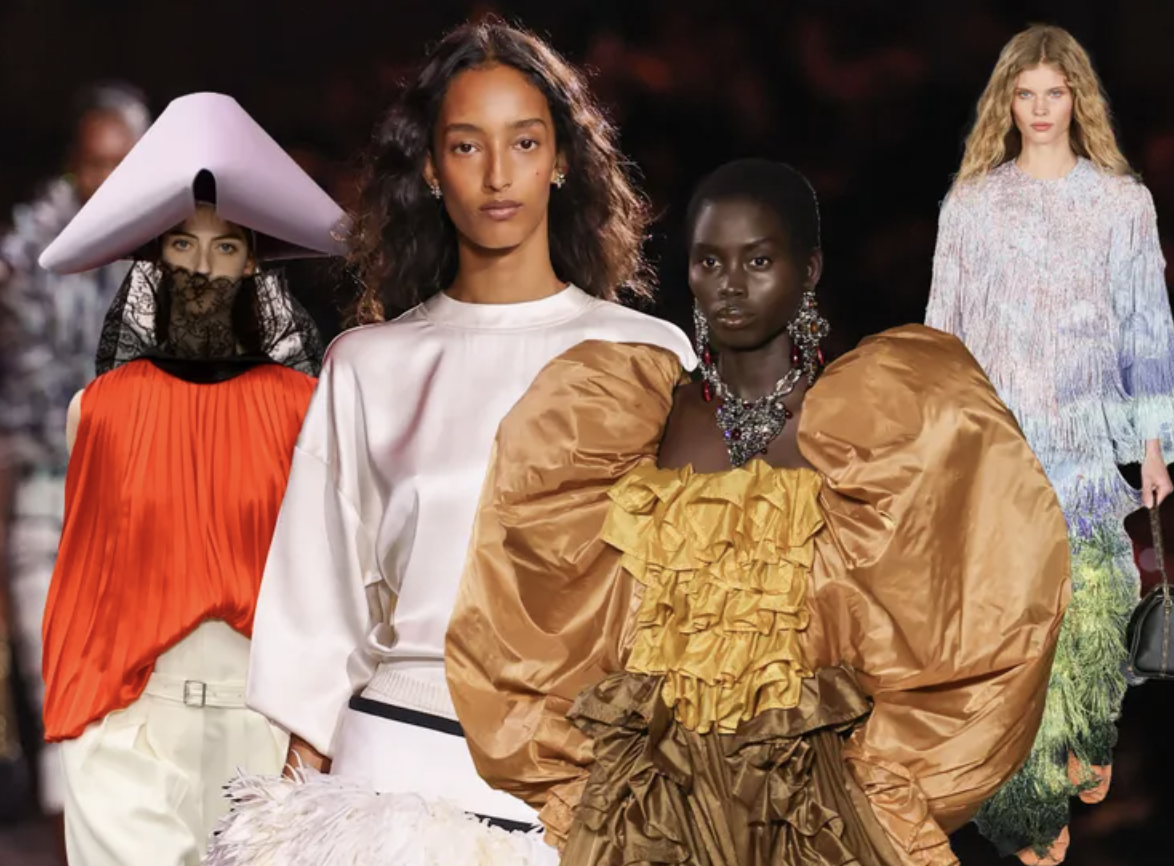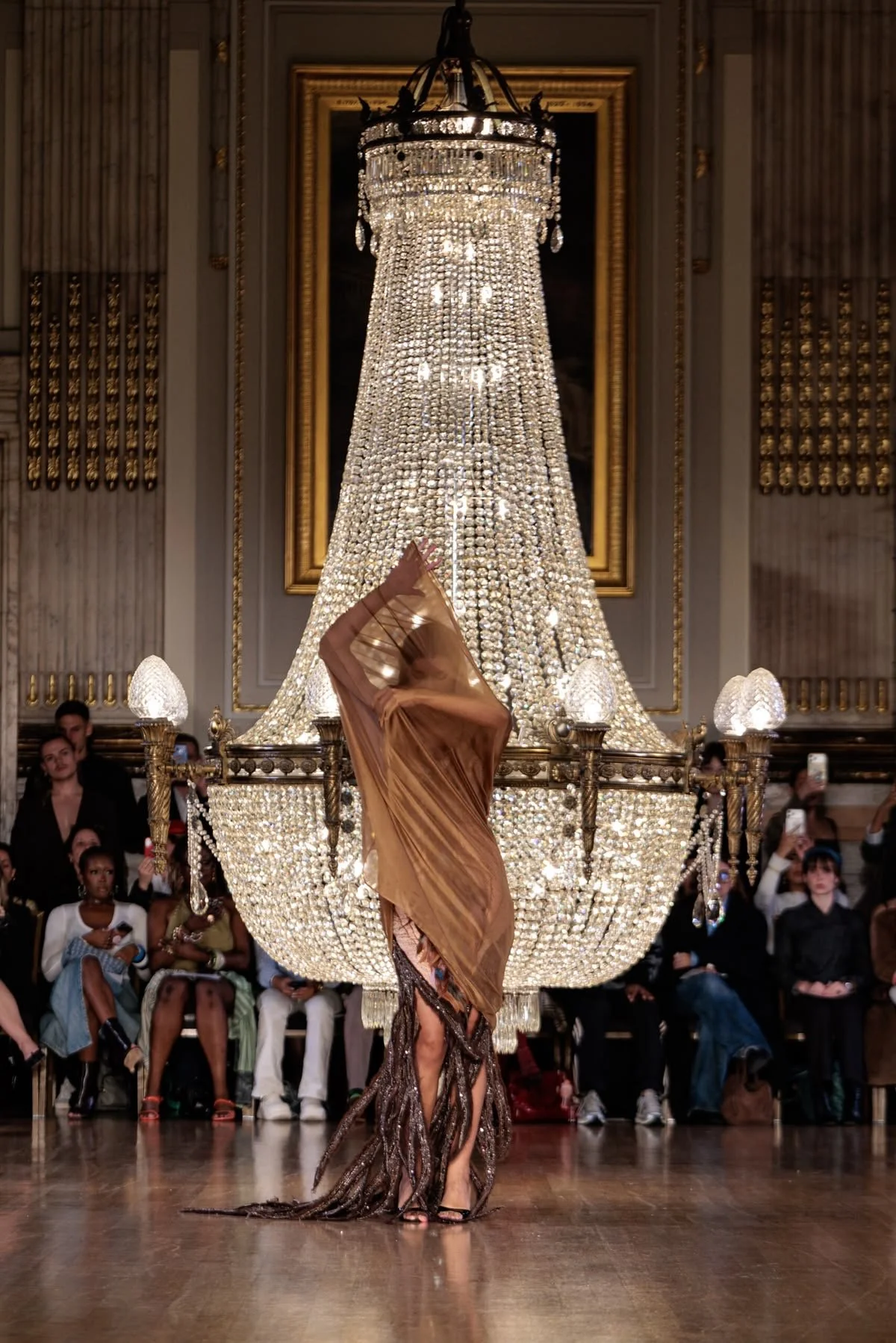
For a while, beauty became very quiet.
Slicked-back hair. Glowing skin. Brushed brows. Milky nails. Nude lips. Neutral colours. Everything clean, polished and seemingly effortless.
The clean girl aesthetic didn't just become a beauty trend. It became an entire visual language.
And there was plenty to love about it.
Healthy-looking skin took priority over heavy foundation. Nails became shorter and more natural. Brows softened. Beauty routines became more considered.
But somewhere along the way, effortless became something we were all putting quite a lot of effort into achieving.
And after watching what happened at London Fashion Week this September, something appears to be shifting.
Blue lipstick.
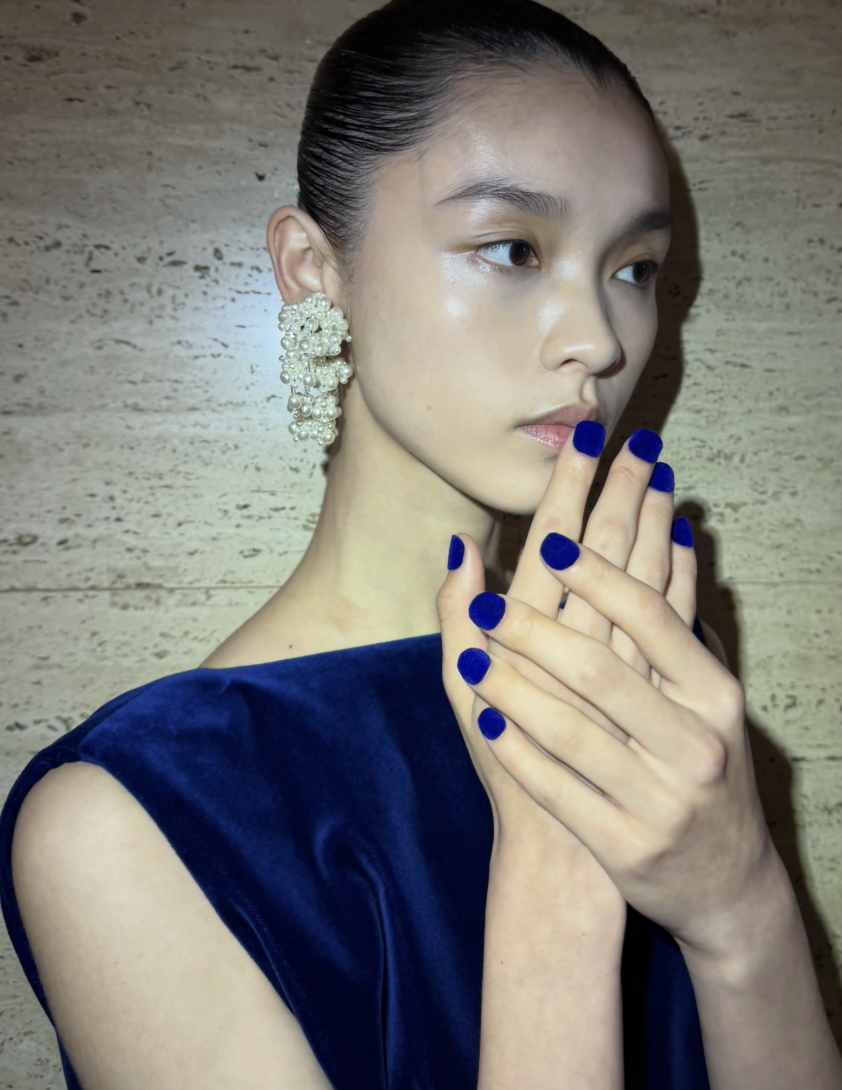
Velvet-covered nails.
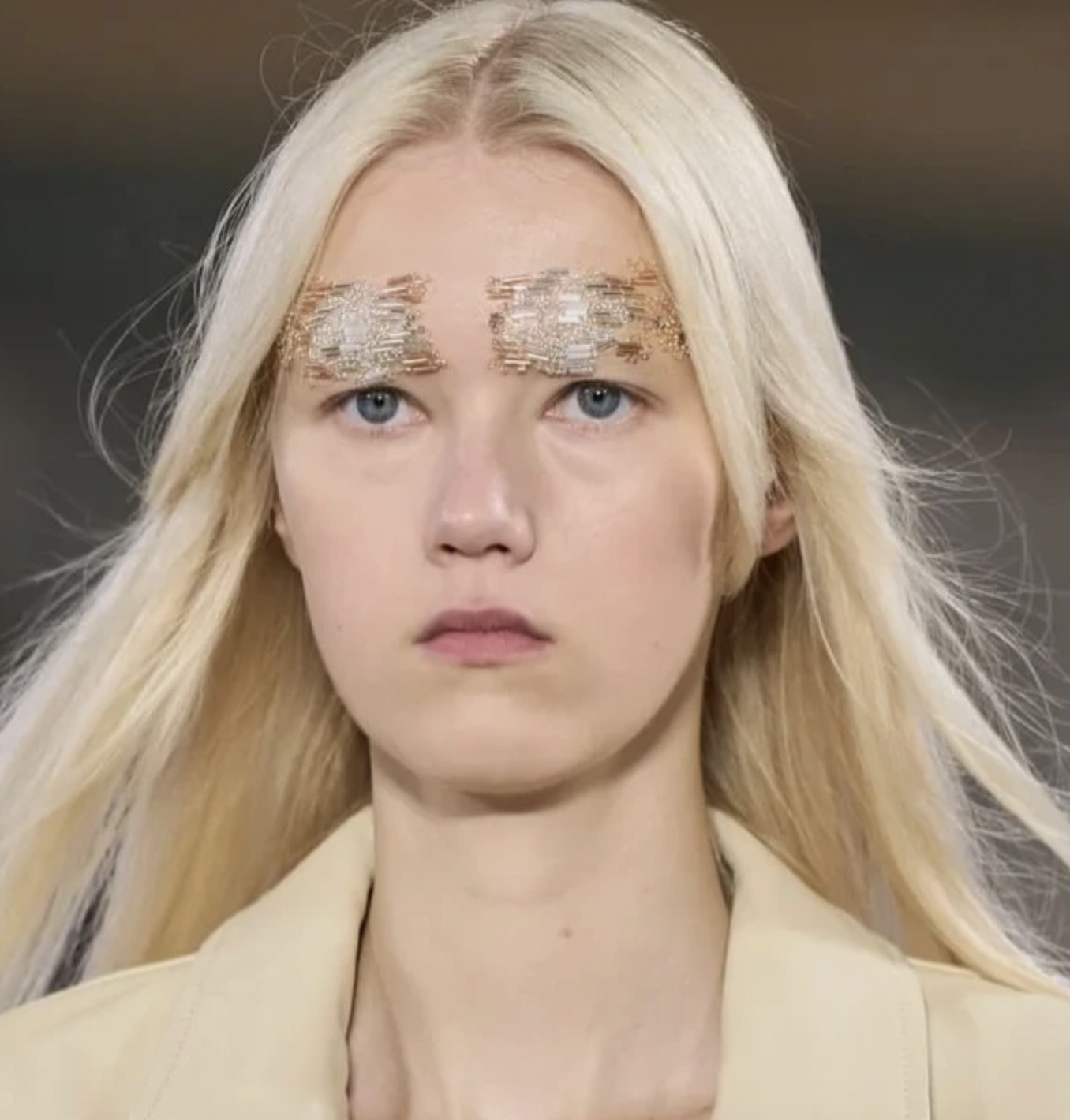
Beaded eyebrows.
Smudged smoky eyes.
Black-cherry lips.
Exaggerated lashes.
Hair that actually looks lived in.
British Vogue even asked the question many of us might now be thinking:
Did London Fashion Week just kill off clean girl beauty? British Vogue
Maybe.
But I think something slightly more interesting is happening.
Beauty might be getting its personality back.
London Fashion Week Looked Different This Time
London Fashion Week's Spring/Summer 2027 shows took place from 17–21 September 2026, with designers including Burberry, Erdem, Simone Rocha, Richard Quinn and Harris Reed presenting alongside London's emerging talent.
And backstage, beauty wasn't following one set of rules.
At one end were incredibly natural complexions, barely-there lashes and understated manicures.
At the other?
Fantasy.
Texture.
Colour.
Gothic references.
Unusual materials.
Makeup being treated almost like jewellery.
Professional Beauty described one of the biggest takeaways from the shows as beauty becoming more individual again. Professional Beauty
That might be much more significant than any individual colour or nail trend.
Because instead of everyone being given the same face, brow or manicure to aspire to, we're beginning to see different identities existing alongside one another.
When Did Effortless Become So Much Effort?
There is something slightly ironic about the clean-girl aesthetic.
It's supposed to look effortless.
But anyone working in beauty knows that effortless can require quite a lot of work.
The barely-there manicure still requires immaculate preparation.
The fluffy natural brow has been carefully shaped.
The slick bun requires product, brushes and precision.
The glowing no-makeup complexion might involve skincare, concealer, cream blush, brow gel, lip product and several strategically placed layers.
None of that is a criticism.
Minimal beauty can be beautiful.
But perhaps we reached a point where one particular version of minimalism became less of a personal preference and more of a uniform.
And once everybody is trying to look effortless in exactly the same way, it stops feeling particularly effortless at all.
Then Simone Rocha Put Velvet on the Nails
This is where London became interesting.
At Simone Rocha, beauty didn't simply complement the clothes.
It became part of them.
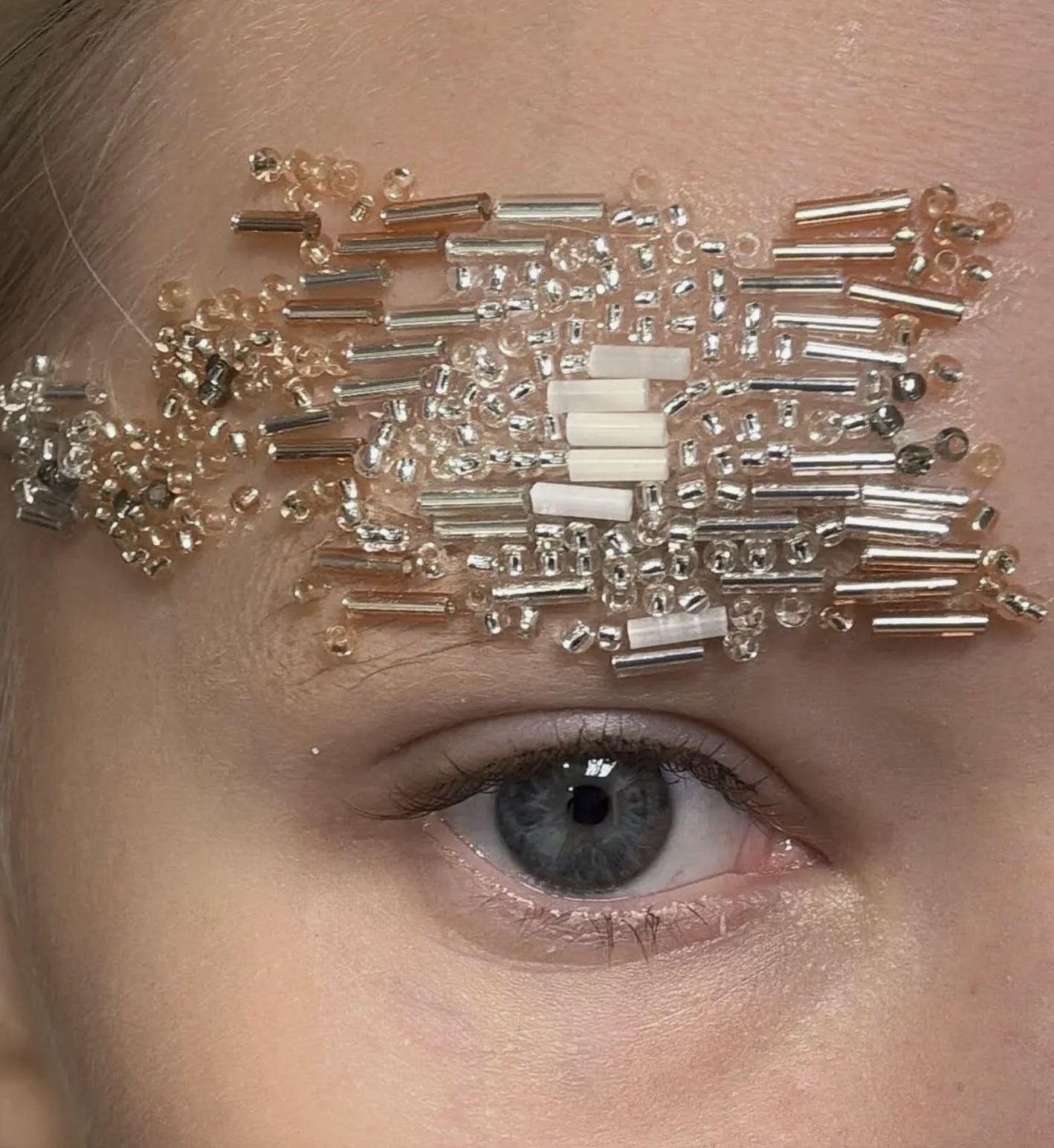
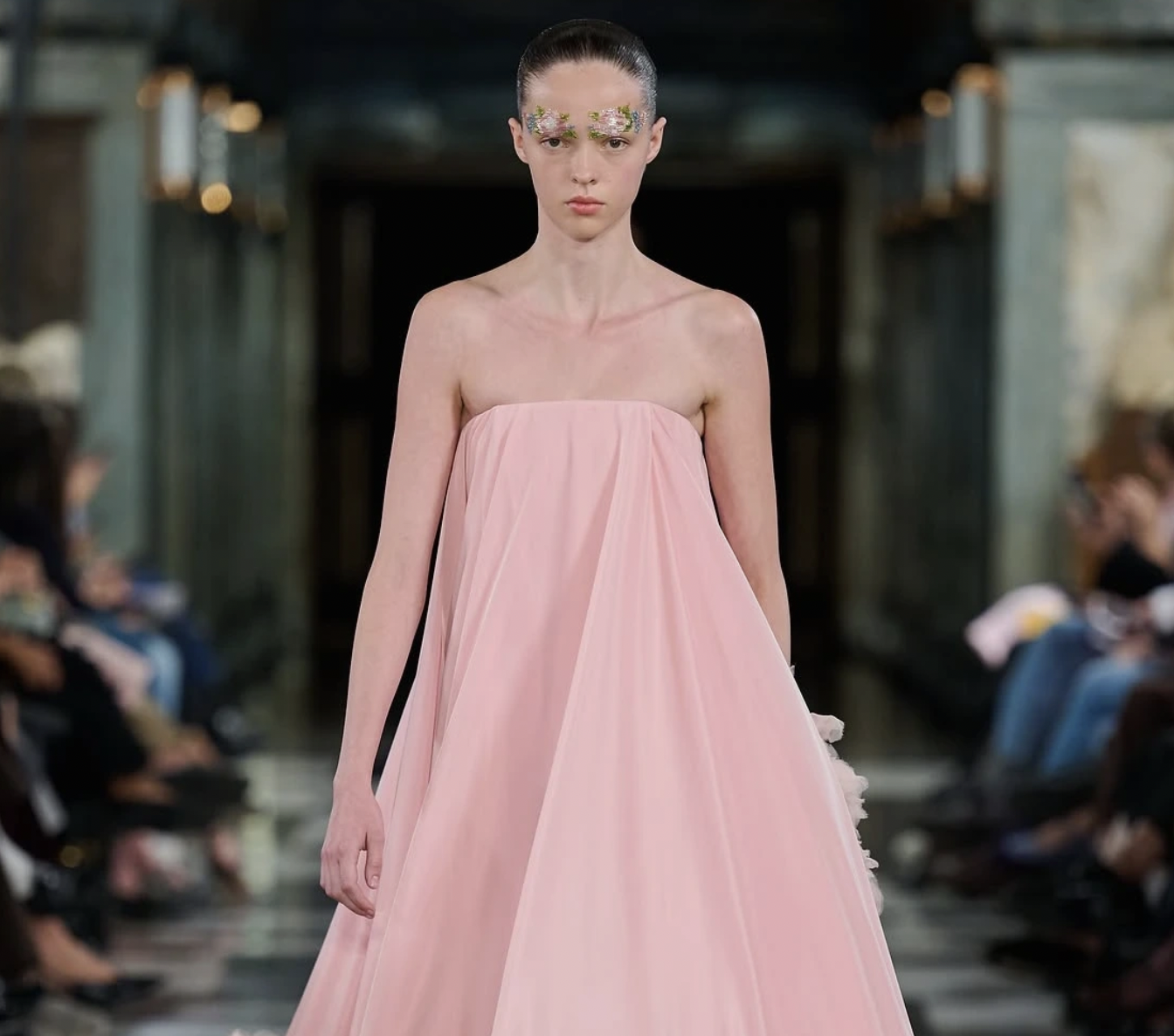
Lead makeup artist Thomas de Kluyver created floral eyebrows from tiny multicoloured beads, while lips were given a flocked, velvety texture.
Nail artist Ama Quashie took the idea even further.
Rather than simply choosing a polish that matched the collection, pieces of jewel-toned velvet were applied directly onto the nails, referencing the fabrics used in Rocha's clothes. British Vogue
As a nail artist, I love the thinking behind this.
Not necessarily because we're all about to start attaching velvet to our clients' nails.
But because somebody looked at a nail and thought:
What else could this be?
That's creativity.
And beauty needs a little bit of that.
Nails Might Be Getting Fun Again
We've spent several years surrounded by beautiful minimal manicures.
Milky white.
Soap nails.
Micro French.
Glazed finishes.
Sheer pink.
Nude.
Chocolate.
Quiet luxury.
Old-money nails.
And I'm not complaining.
There will always be something incredibly satisfying about a beautifully prepared, perfectly shaped natural-looking manicure.
But London Fashion Week gave us something else alongside it.
At Simone Rocha there was velvet.
At McQueen, dimensional droplet designs appeared on the nails.
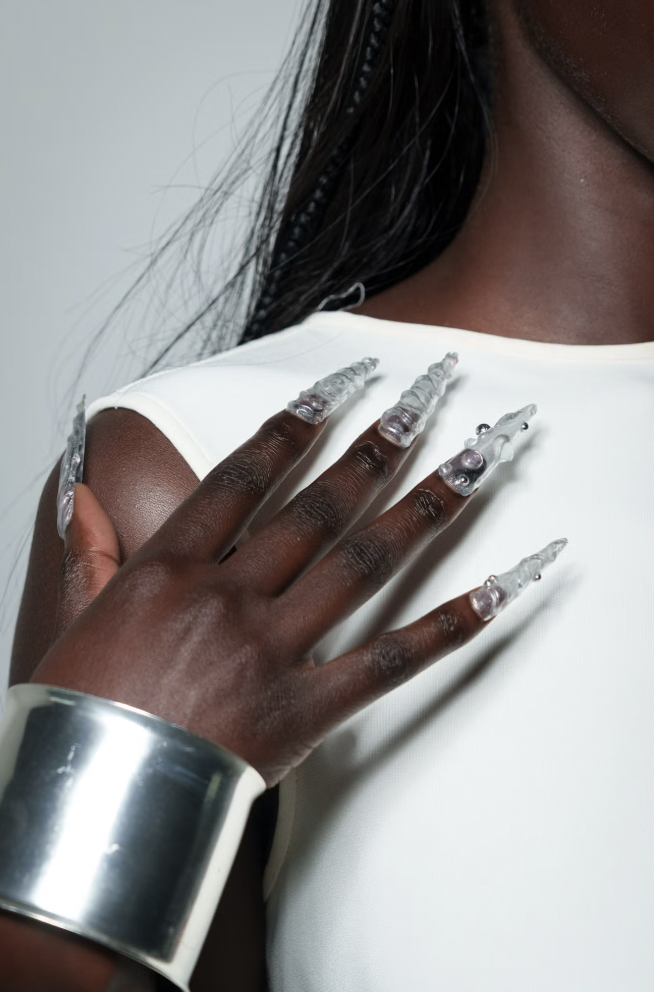
Dreaming Eli showed long marbled grey-and-white tips with silver detailing.
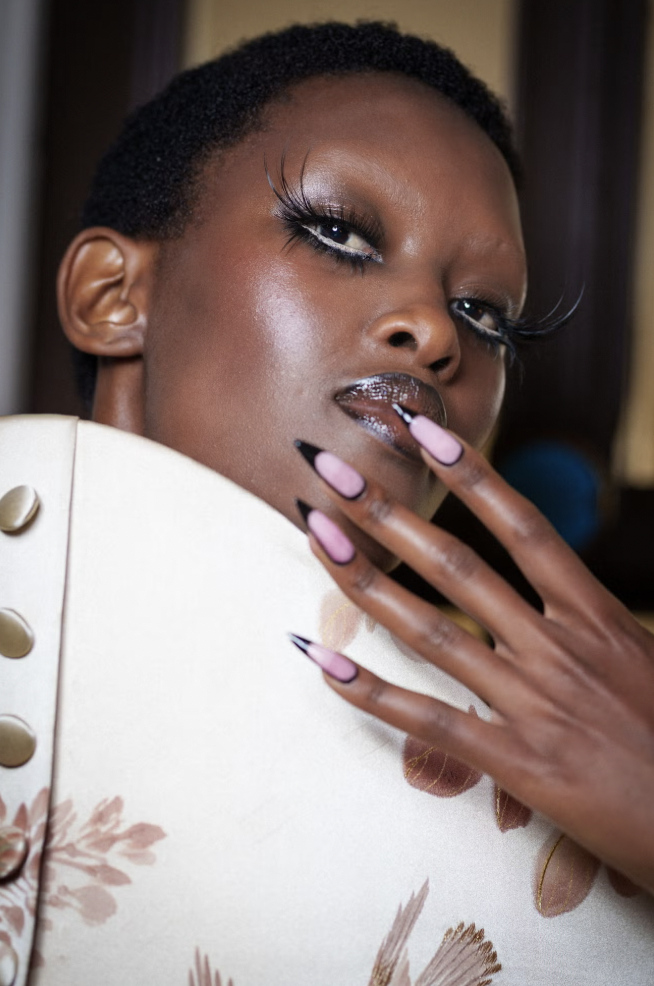
Elsewhere there were 3D tear designs, dark short nails, negative space and textured finishes.
And yet Richard Quinn still showed immaculate, barely-there sheer pink manicures. Professional Beauty
That's the part I find most interesting.
The nude manicure hasn't disappeared.
It just isn't the only answer anymore.
Perhaps the next big nail trend isn't actually a colour.
Perhaps it's having a choice.
Your Nude Nails Are Still Allowed
This needs saying.
Whenever a new aesthetic arrives, the internet immediately wants to bury whatever came before it.
Clean girl is dead.
Minimalism is over.
Quiet luxury is finished.
Except fashion and beauty rarely work like that in real life.
If you've spent the last five years wearing short nude nails because you genuinely love short nude nails, you don't suddenly need velvet fingertips to prove you have personality.
And London Fashion Week itself didn't abandon minimalism.
Sheer manicures appeared alongside the experimental ones.
Natural skin appeared alongside statement makeup.
Bare lashes appeared at some shows while exaggerated, doll-like lashes appeared at others. Professional Beauty
That's what makes the shift exciting.
We aren't necessarily replacing minimalism with maximalism.
We're allowing both to exist.
Brows Became Jewellery
Brows have spent decades being told what they're supposed to look like.
Thin.
Then thicker.
Then highly defined.
Then ombré.
Then laminated.
Then fluffy.
Then natural.
And now skinny again.
We've already discussed the return of thin brows in CC Magazine.
But Simone Rocha took the conversation somewhere completely different.
Brows weren't simply shaped.
They were decorated.
Tiny coloured beads were positioned across the brows to create floral forms, with the makeup team treating makeup as an accessory to the clothes rather than simply something designed to make a face conventionally prettier. British Vogue
Will your next brow client ask for embroidered flowers?
Probably not.
But that's not really the point.
The interesting idea is that the eyebrow didn't have to be perfected.
It could be played with.
Makeup Remembered It Can Be Makeup
This might be where the change was most obvious.
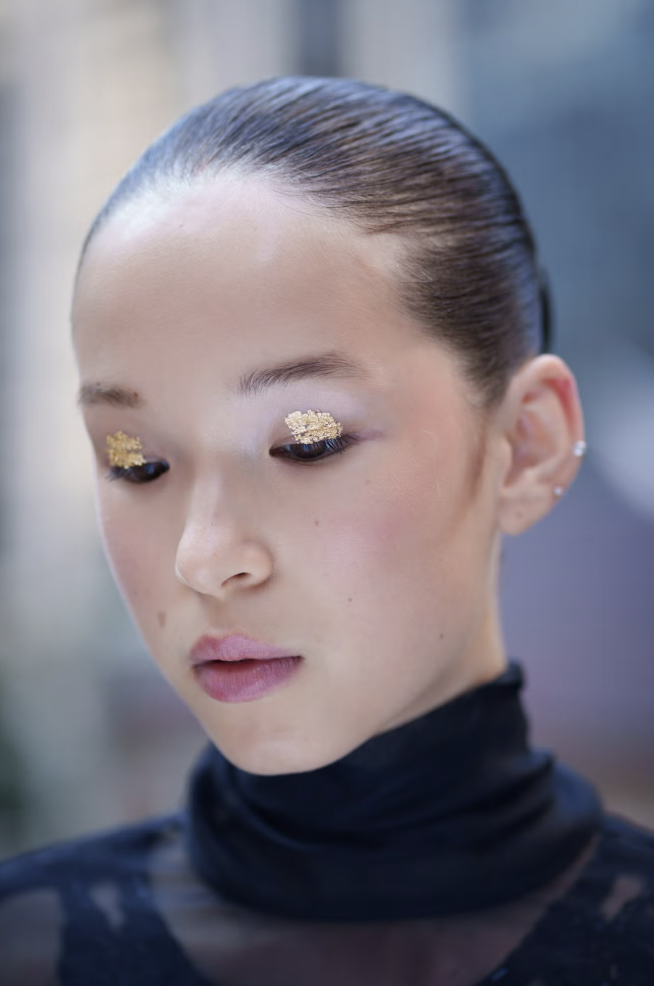
At Aaron Esh, there was electric-blue lipstick, fluorescent colour and silver eyeshadow.
At Burberry, lips appeared in unexpected shades including lavender alongside brighter pinks and corals.
At Chopova Lowena, Slavic folklore inspired something altogether darker: oversized feather-like lashes, sunken eyes, faux tears and thorn-like facial details.
At Dreaming Eli, makeup moved through sepia and ashy grey into darker, rebellious, rave-influenced looks.
And at Richard Quinn, mascara wasn't applied delicately.
It was layered to create exaggerated, doll-like lashes. British Vogue
It wasn't all designed to make somebody look naturally flawless.
Some of it was strange.
Some romantic.
Some gothic.
Some deliberately imperfect.
Some probably isn't leaving the runway.
And that's completely fine.
Beauty doesn't always have to be practical.
Sometimes it can simply be creative.
Whatever Happened to Experimenting?
Think back to some of the beauty identities we've lived through.
The goth girl.
The punk.
The emo.
The full-glam girl.
The girl who wouldn't leave the house without red lipstick.
The girl with ridiculously long acrylics.
The one with blue eyeshadow.
The one who changed her hair colour every few months.
The one whose eyeliner entered the room before she did.
Not every look was timeless.
Not every photograph aged particularly well.
But there was personality in it.
Beauty told you something about the person wearing it.
Social media has given us access to more beauty inspiration than any generation before us.
But perhaps there is a downside to millions of us seeing the same inspiration at exactly the same time.
One manicure goes viral.
Everyone saves it.
One brow shape becomes fashionable.
Everyone requests it.
One celebrity wears a particular colour.
Suddenly it's everywhere.
We have more inspiration than ever.
Yet sometimes we end up looking remarkably similar.
Even Hair Is Loosening Up
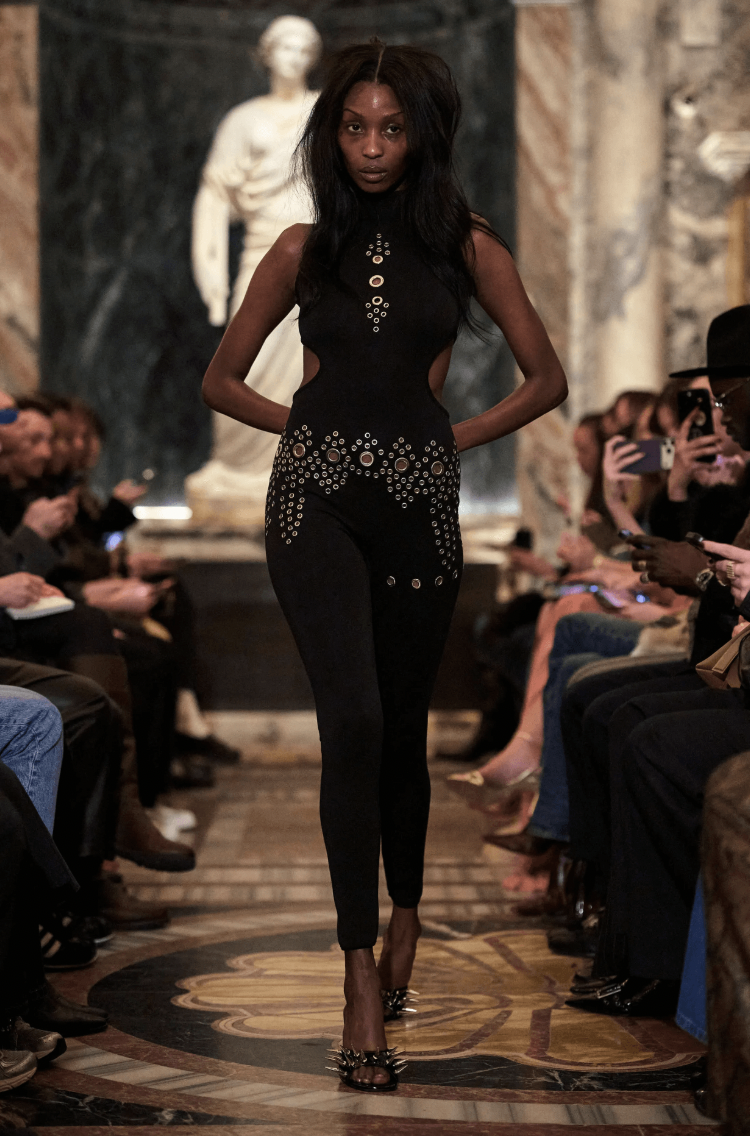
The shift wasn't limited to makeup and nails.
At several London shows, hairstylists worked with the models' existing texture and movement rather than forcing everybody into the same polished finish.
At the M&S show, hairstylist Sam McKnight specifically described the intention as celebrating each model's individuality and enhancing their natural texture and character rather than imposing something onto it.
Similar thinking appeared across Erdem, Ahluwalia, Labrum and Bora Aksu. Glamour UK
That feels significant after years of tightly controlled beauty.
Perhaps done doesn't always have to look completely done.
Perfectly Imperfect Is More Interesting
There is a difference between poor technique and intentional imperfection.
A smudged eye can still require skill.
A loose hairstyle can still be carefully constructed.
A natural brow still requires an understanding of shape.
A deliberately mismatched manicure still requires good preparation and application.
Beauty professionals aren't suddenly abandoning technique.
If anything, strong technique gives you the freedom to break the rules deliberately.
That's when things become interesting.
You understand what perfect looks like.
Then you decide whether perfect is actually what the look needs.
Skin Is Still Skin
Perhaps one of the nicest things to come from the shows was that experimentation didn't necessarily mean hiding the face underneath it.
Healthy-looking skin remained important.
At Erdem, the complexion was intentionally allowed to look like skin.
At Fashion East, makeup artists created luminous, almost humid-looking finishes while keeping coverage minimal.
Even when one feature became dramatic, the rest of the face was often comparatively restrained. Professional Beauty
That feels like a more interesting evolution of the clean-girl era.
Maybe we keep what it taught us about appreciating skin.
We just stop insisting that everything else has to be beige.
Beauty Doesn't Need Another Uniform
This is the part I hope stays.
I don't want the clean girl to disappear.
I don't particularly want everyone to become a maximalist either.
Because then we've simply swapped one uniform for another.
The interesting thing about what happened in London wasn't that one aesthetic won.
It was the contrast.
Bare lashes at one show.
Doll lashes at another.
Sheer pink nails here.
Actual velvet nails there.
Natural texture.
Blue lipstick.
Black-cherry lips.
Bare skin.
Beaded brows.
Professional Beauty described the commercially relevant message from SS27 as personalisation replacing prescription. Professional Beauty
That's a direction I can get behind.
Maybe Beauty Is Becoming Personal Again
The clean girl can keep her slick bun.
The maximalist can bring back her blue eyeshadow.
The nude-nail client can stay nude.
The nail-art girl can put something completely ridiculous on every finger.
You can wear black-cherry lipstick one weekend and nothing but lip balm the next.
Your brows don't have to belong to a decade.
Your nails don't have to prove that you understand quiet luxury.
Your face doesn't have to follow an algorithm.
And you don't need to abandon an aesthetic you genuinely love simply because the internet has decided something else is cooler now.
Perhaps the most interesting beauty trend to come out of London Fashion Week wasn't velvet nails, embroidered brows, black-cherry lips or barely-there lashes.
It was permission.
Permission to experiment.
Permission to be understated.
Permission to be excessive.
Permission to change your mind.
Permission to look like yourself.
Maybe beauty isn't getting louder.
Maybe it's getting more personal.
And yes—
beauty might finally be getting fun again.